Lunar New Year is one of the most significant traditional festivals in Vietnam, featuring unique customs deeply rooted in indigenous cultural identity throughout the country. In the thousand-year-old capital of Hanoi, the cultural traditions surrounding Lunar New Year are especially rich and distinctive.
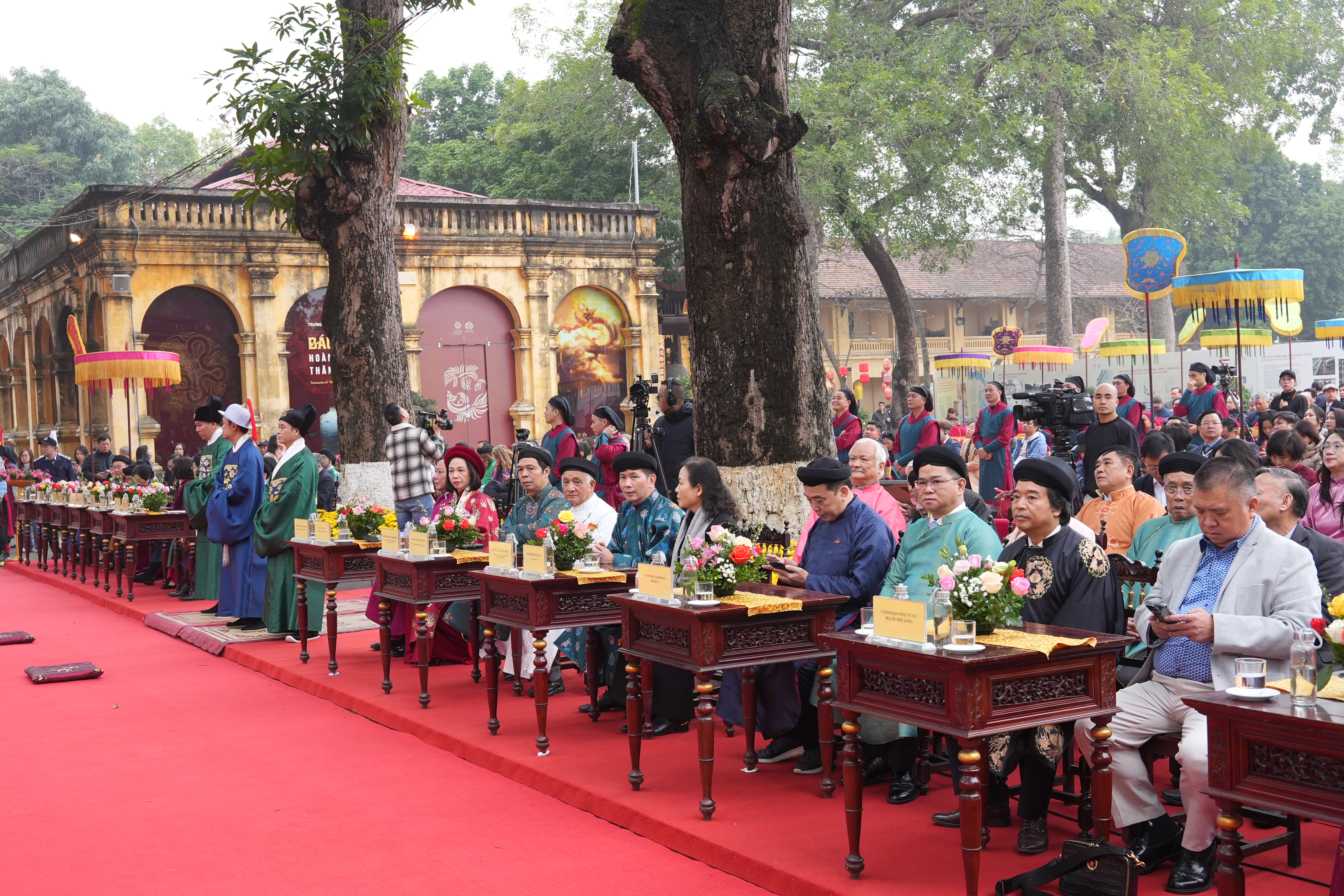
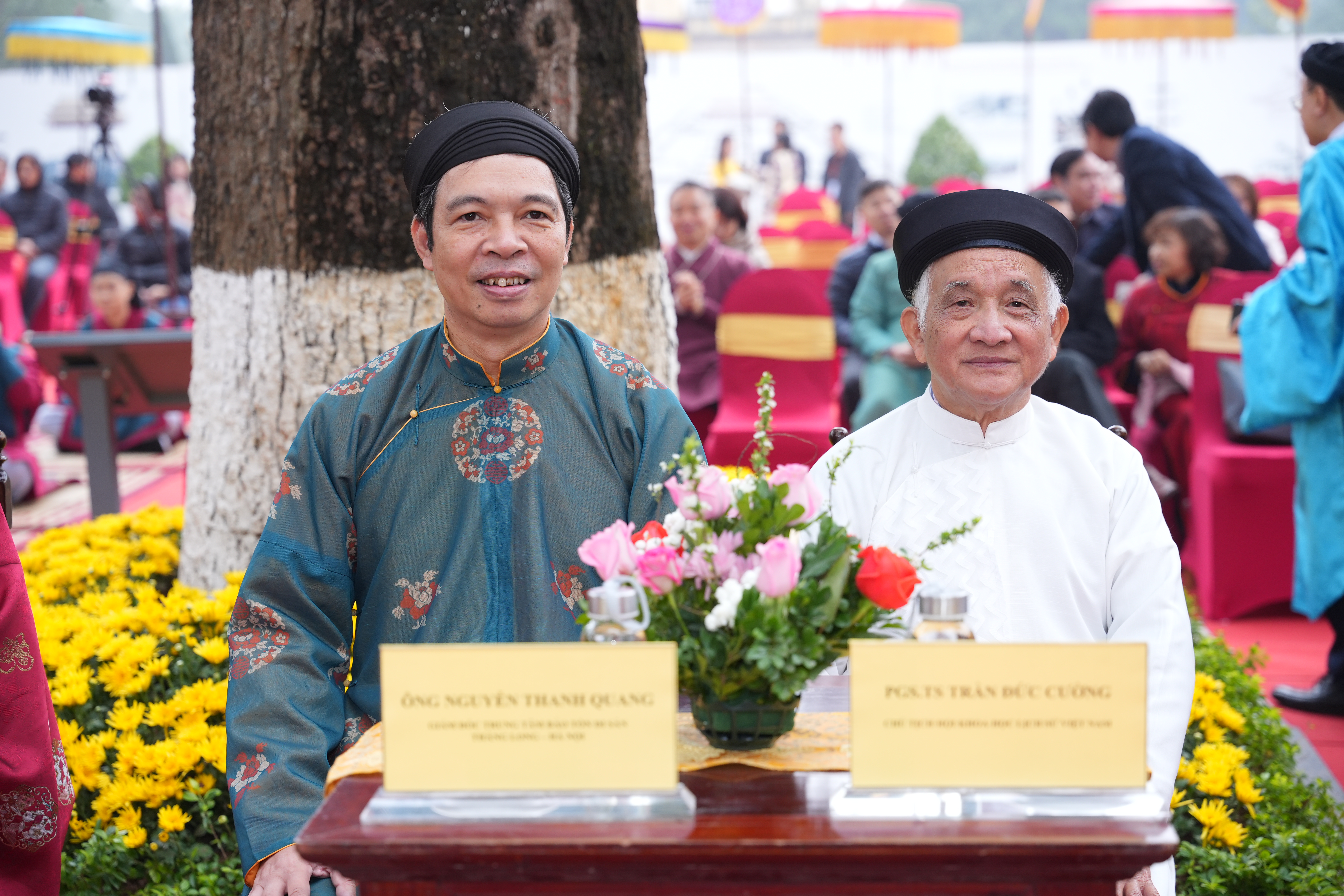
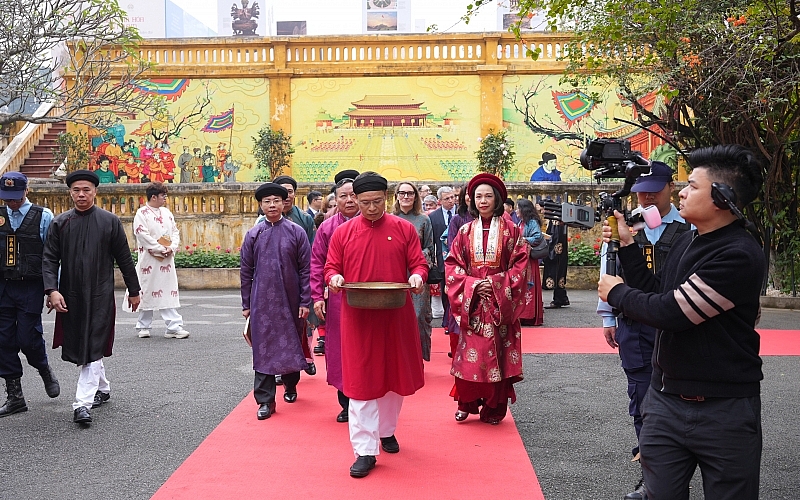
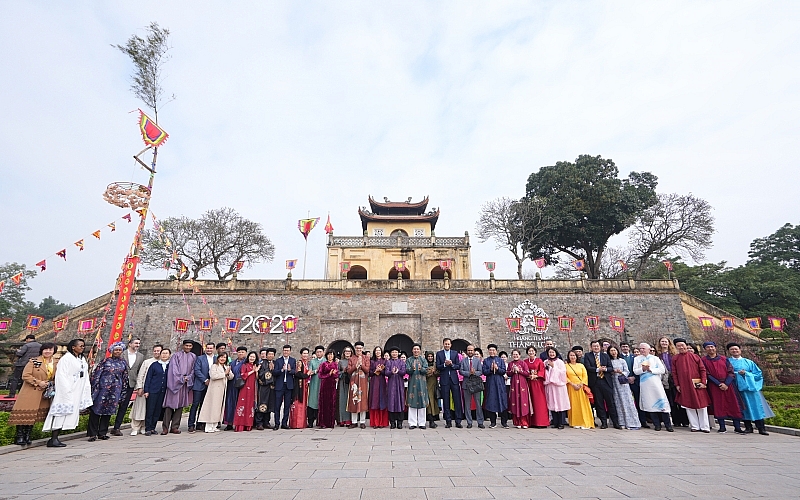
In an effort to preserve and promote the representative royal New Year rituals as well as the traditional folk customs of Thang Long – Dong Do – Hanoi, the Thang Long Hanoi Heritage Conservation Centre organized the program “Reenactment of the ‘Farewell to the Old Year and Welcoming the New Year’ Ceremony” on the morning of February 10, 2026 (the 23rd day of the twelfth lunar month of the Year of the Snake) at the Thang Long Imperial Citadel.
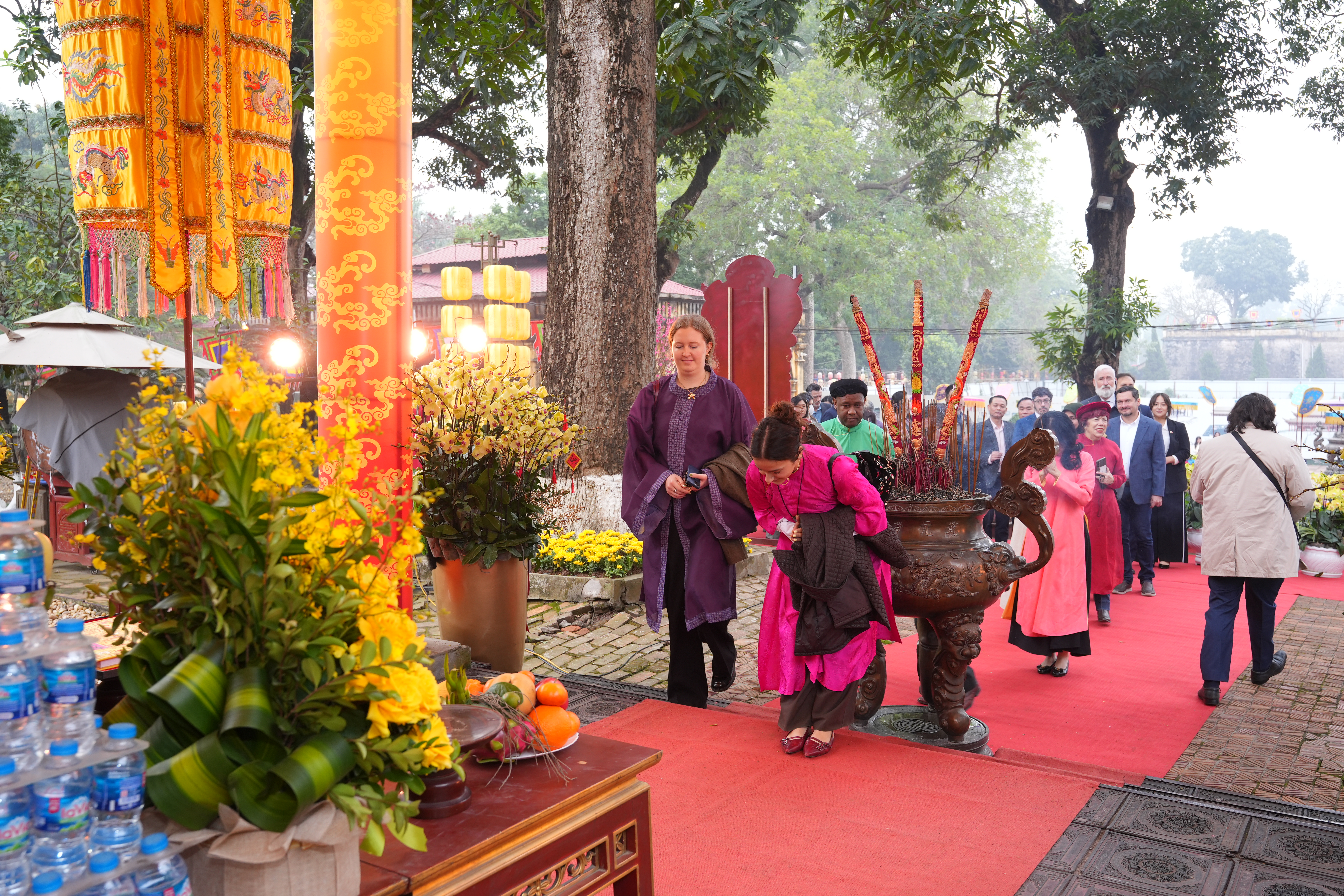
Throughout the program, audiences were introduced to a series of traditional Lunar New Year rituals once held within the ancient royal court of Thang Long. The event was organized with the aspiration of praying for national prosperity, peace, and well-being for the people. Let us look back at some of the highlights and memorable moments from the program.
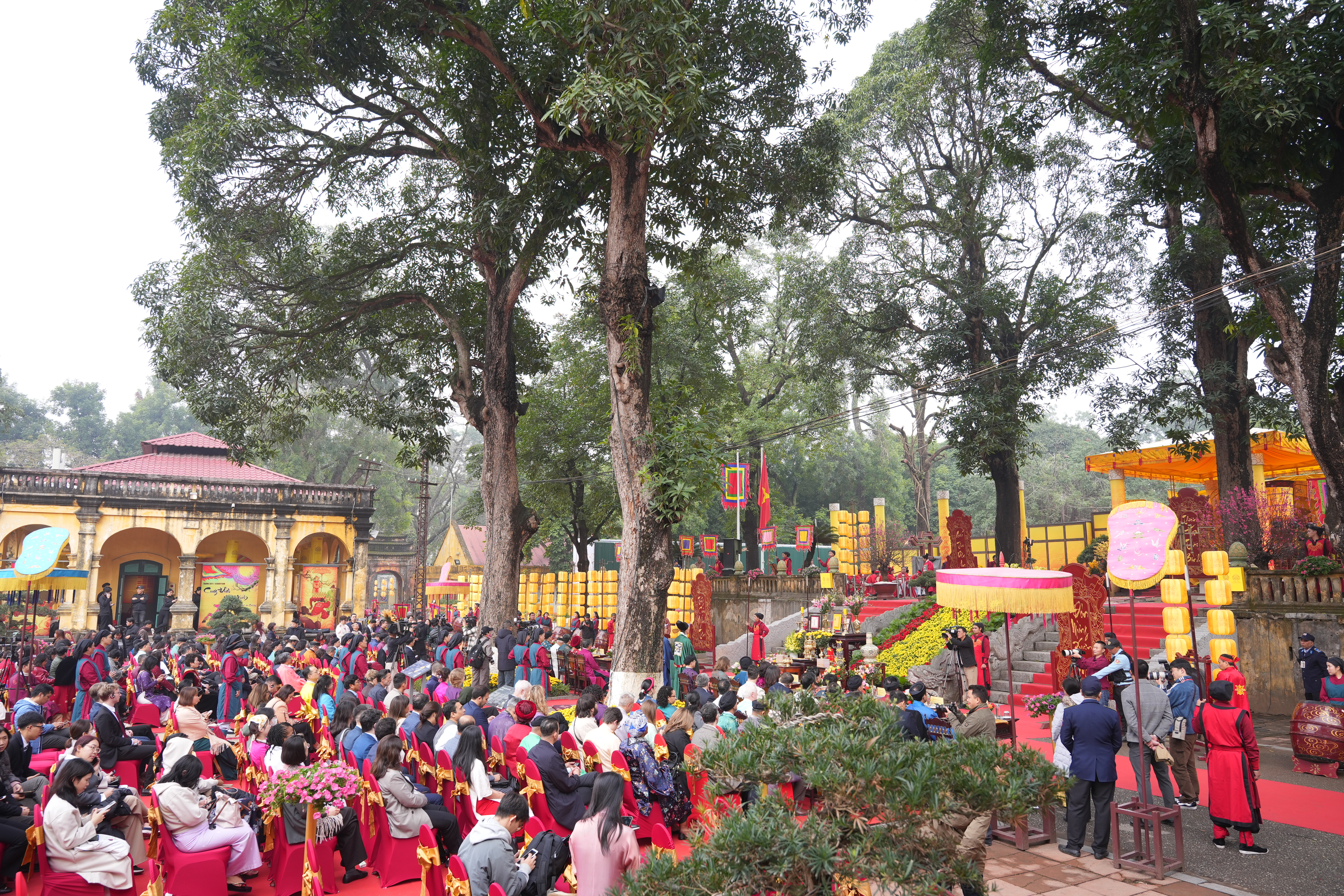
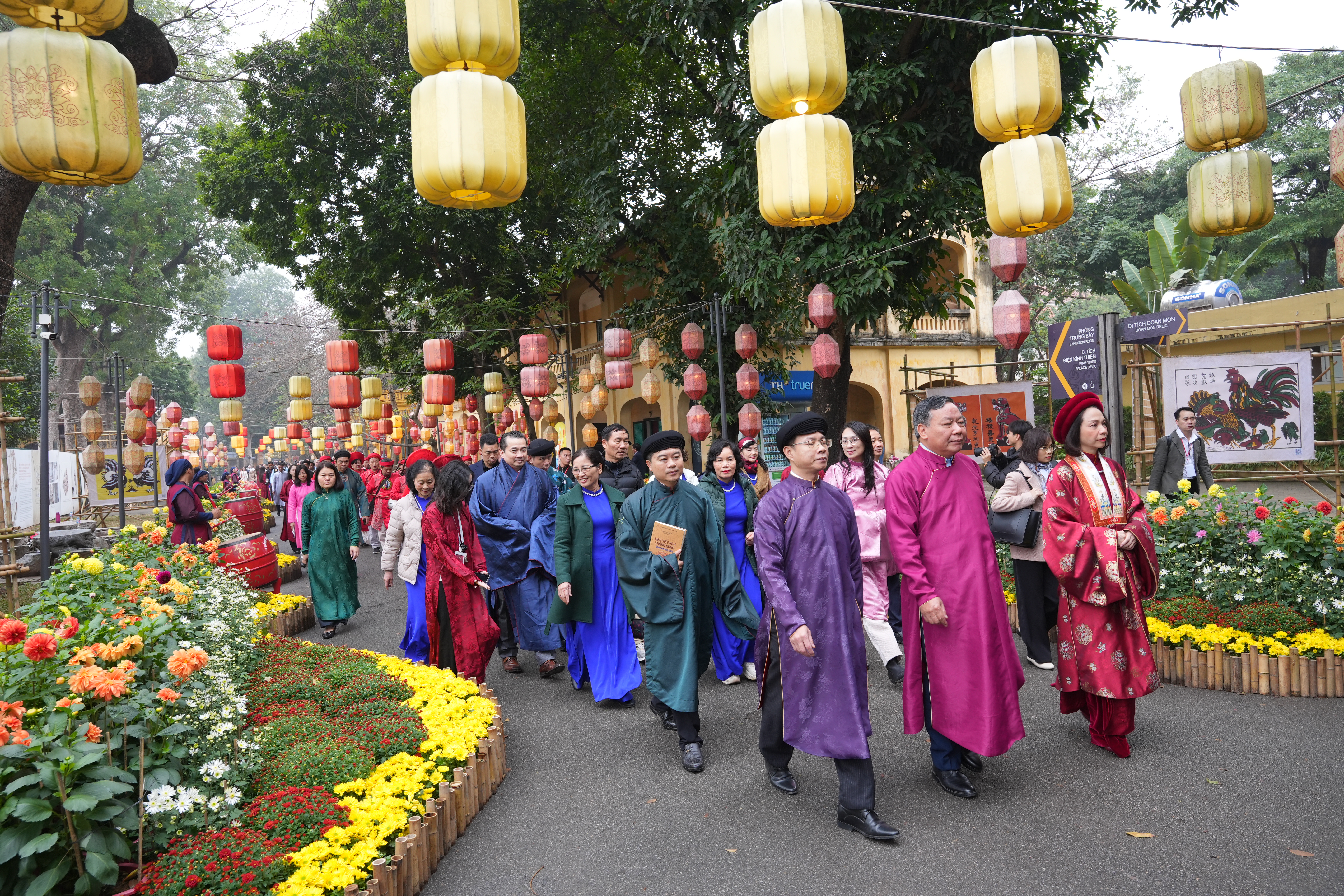
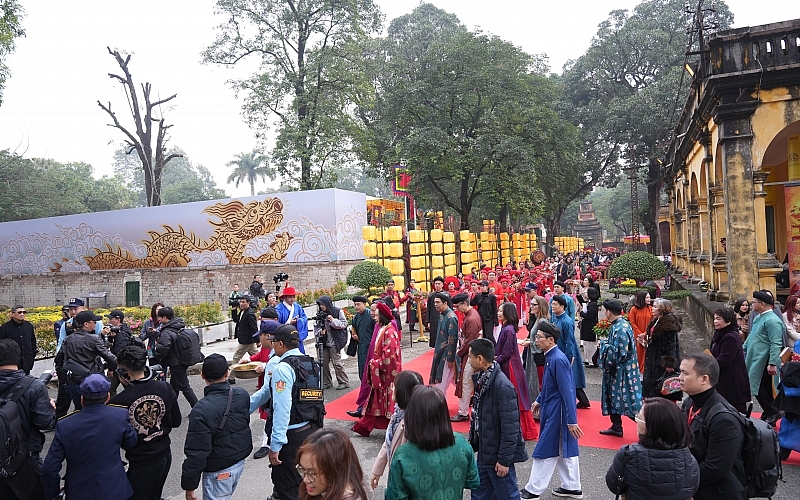
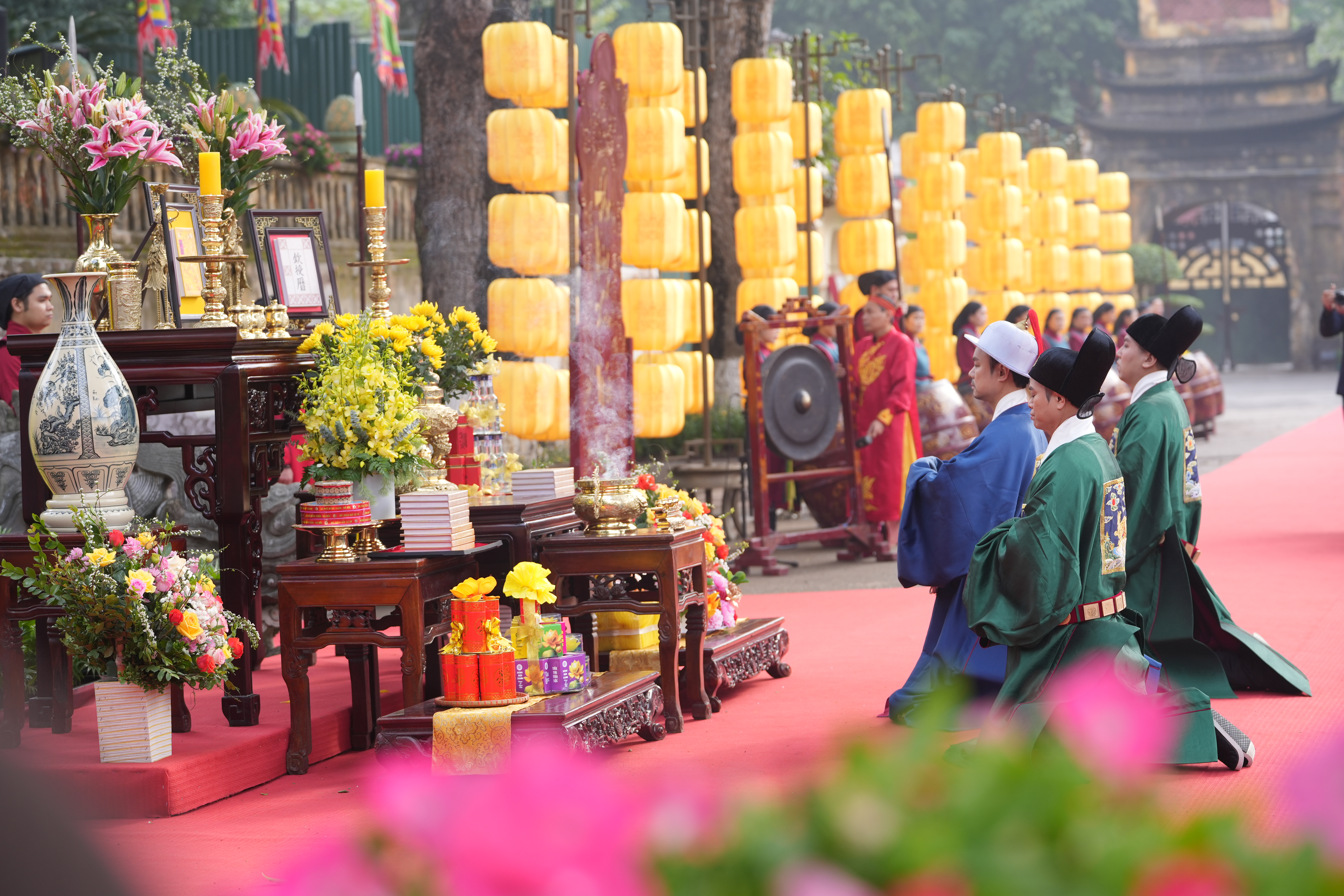
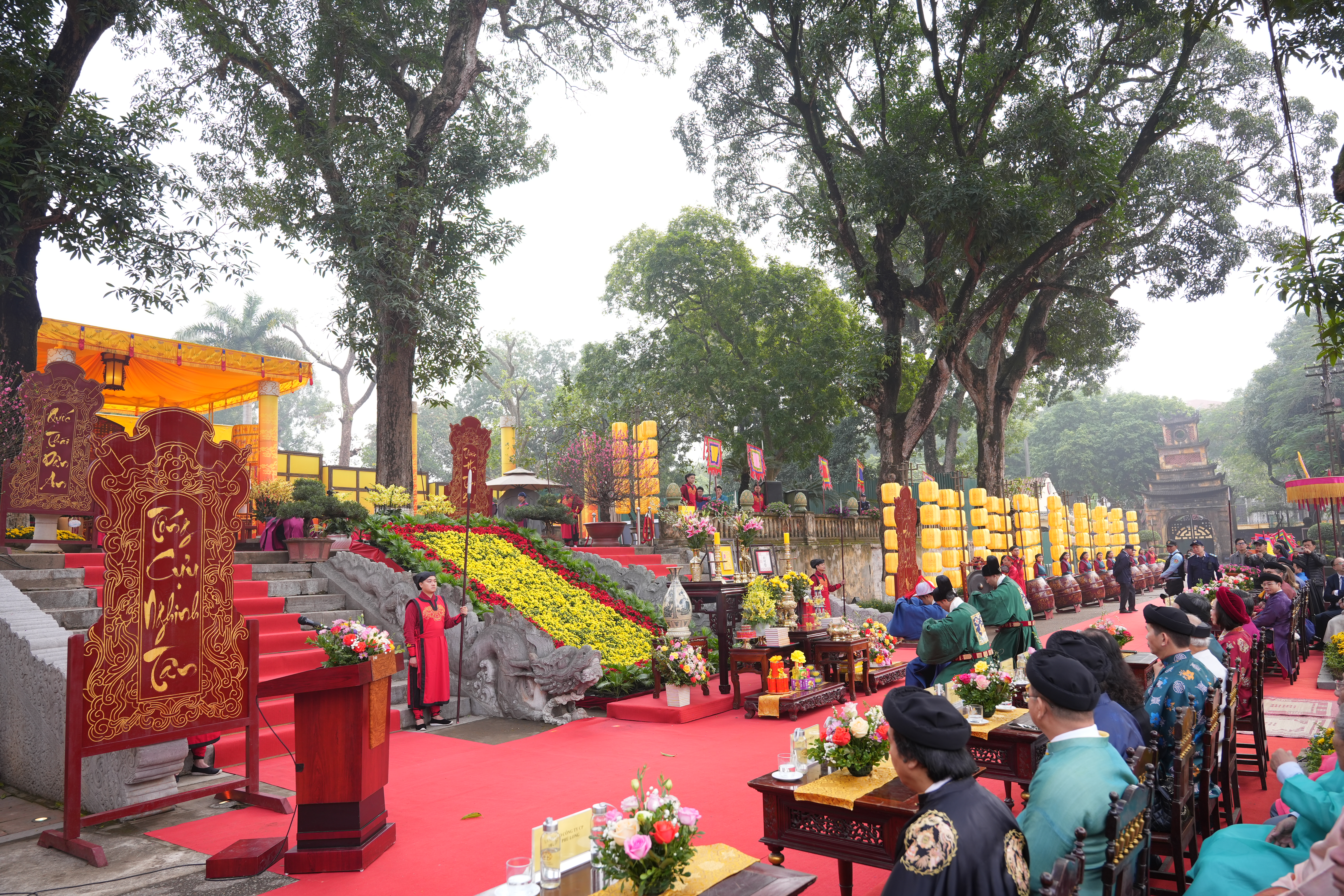
The Calendar Presentation Ceremony (Lễ Tiến Lịch)
Under the feudal dynasties, the King was regarded as the “Son of Heaven,” serving as the link between Heaven and the people. Therefore, the monarch bore the responsibility of promulgating the official calendar to regulate agricultural seasons, ceremonial rites, and social order.
From the Ly Dynasty, when the Chính Dương Tower was established and the Thụ Thời calendar was compiled; to the Trần Dynasty, which founded the Imperial Astronomical Bureau and created the Hiệp Kỷ calendar; and later the Lê Dynasty, which established the Directorate of Astronomy (Tư Thiên Giám) to compile the Khâm Thụ and Bác Trúng Kinh calendars — the preparation and issuance of calendars always held great importance within the royal court.
Once approved by the King, the calendars were printed and distributed according to rank and function: the Ngự lịch for the King, the Long Phụng lịch for worship rituals, the Quan lịch for officials, and the Dân lịch distributed to villages and local communities. In the twelfth lunar month, the sealing ceremony would take place, and on the 24th day of the month, the royal court solemnly conducted the Calendar Presentation Ceremony at the Dragon Courtyard of Kính Thiên Palace.
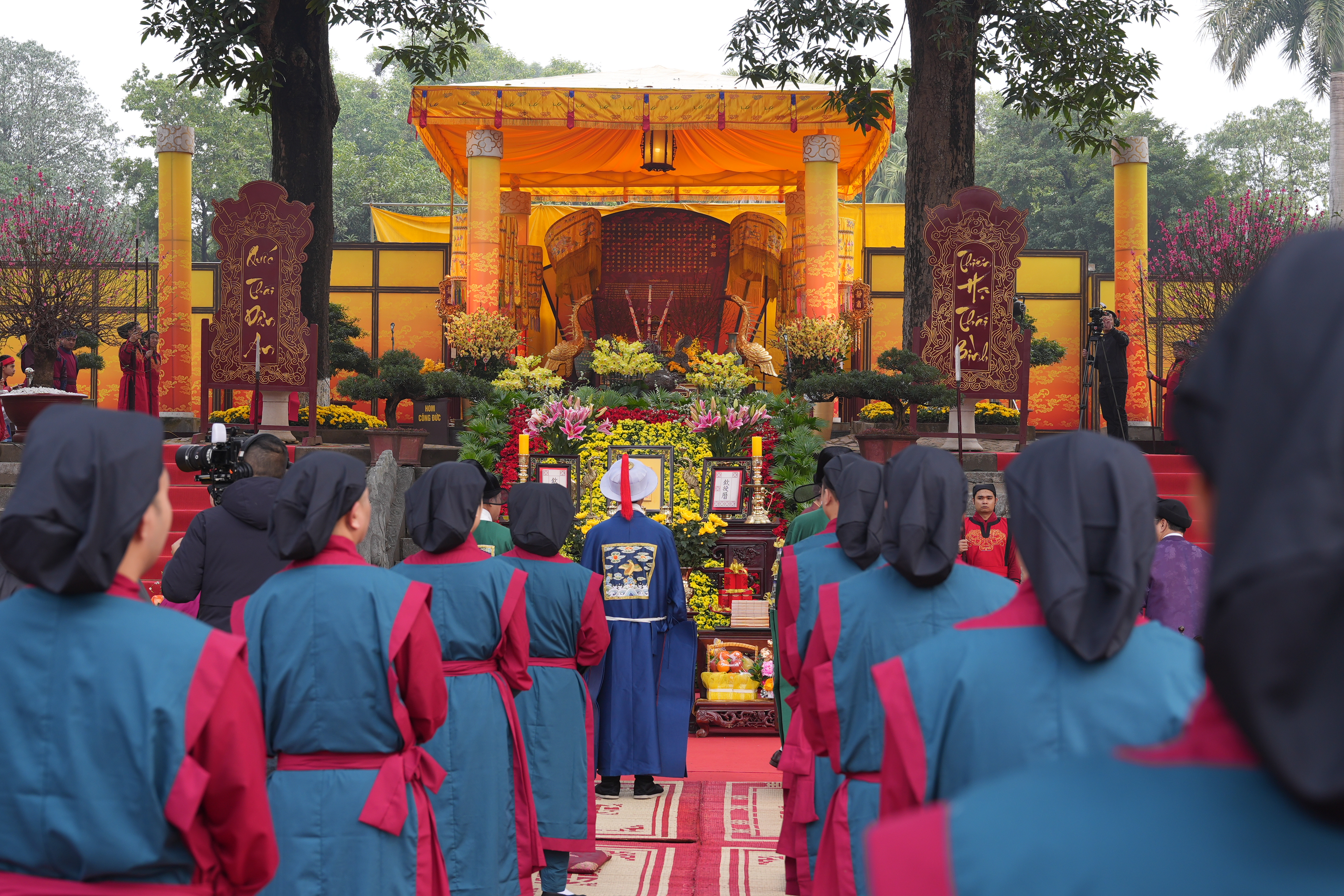
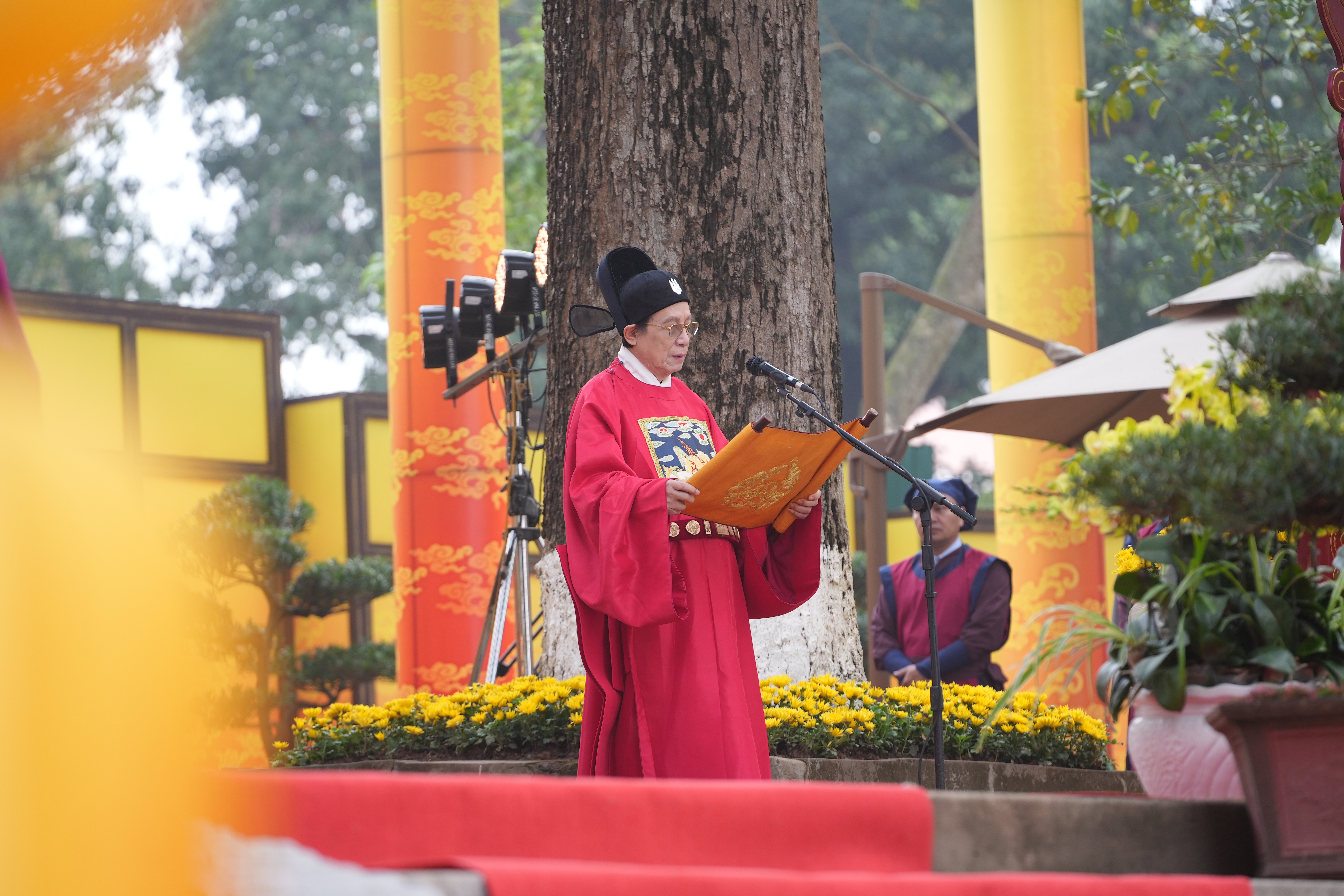
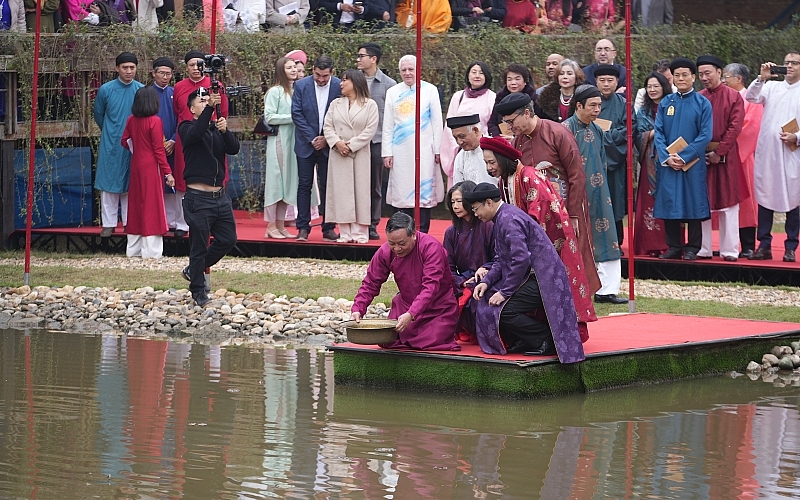
The Carp Releasing Ritual to Send the Kitchen Gods Back to Heaven
Every year on the 23rd day of the twelfth lunar month, both the royal court and Vietnamese households perform rituals to bid farewell to the Kitchen Gods (Ông Công, Ông Táo) as they return to Heaven, praying for peace and prosperity for the nation and each family in the coming year.
In Vietnamese folk culture, the carp is associated with the legendary tale of transforming into a dragon, symbolizing perseverance, resilience, good fortune, strength, determination, and success.
After years of careful research, collection, and study, the Thang Long – Hanoi Heritage Conservation Centre has annually recreated this ceremony in the hope of preserving one of Hanoi’s most unique and meaningful traditional cultural practices during the Lunar New Year season.
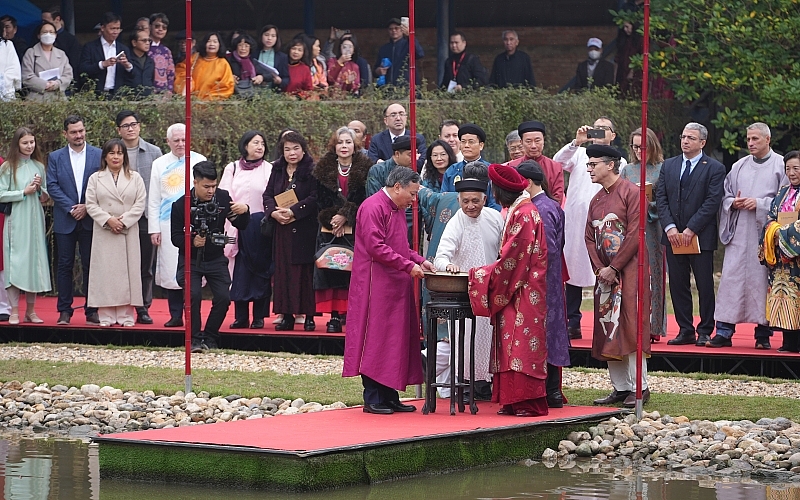
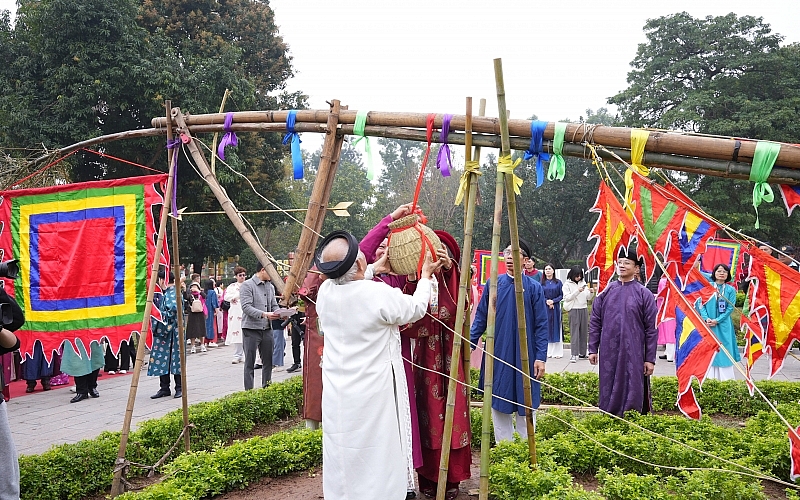
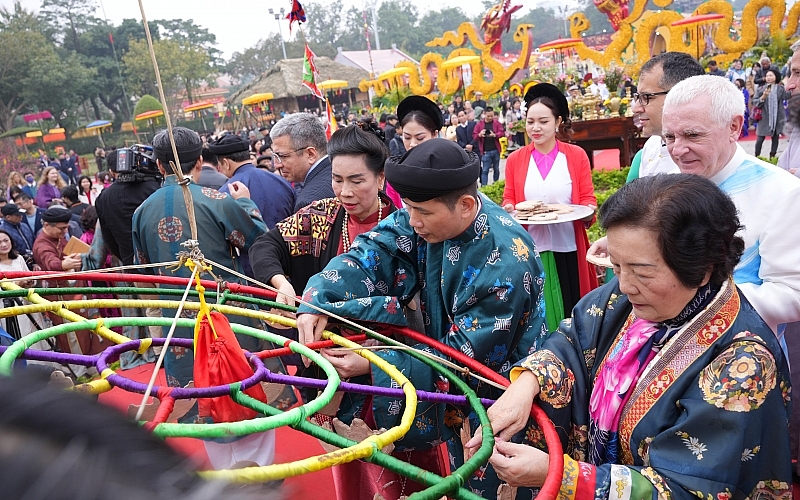
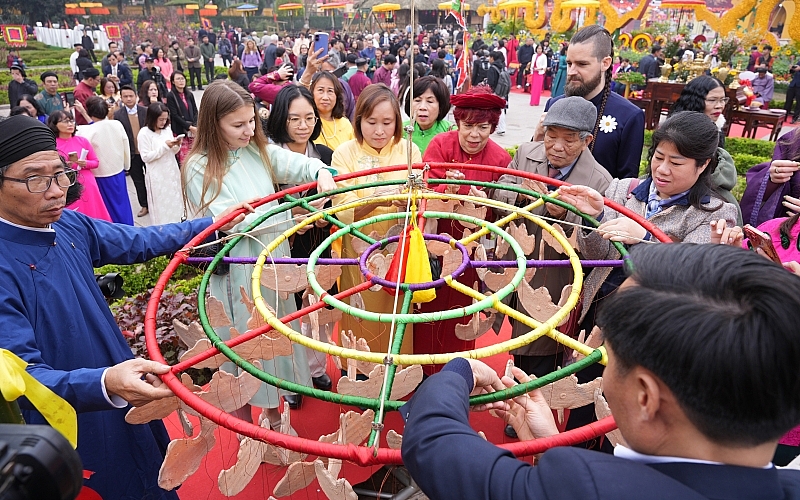
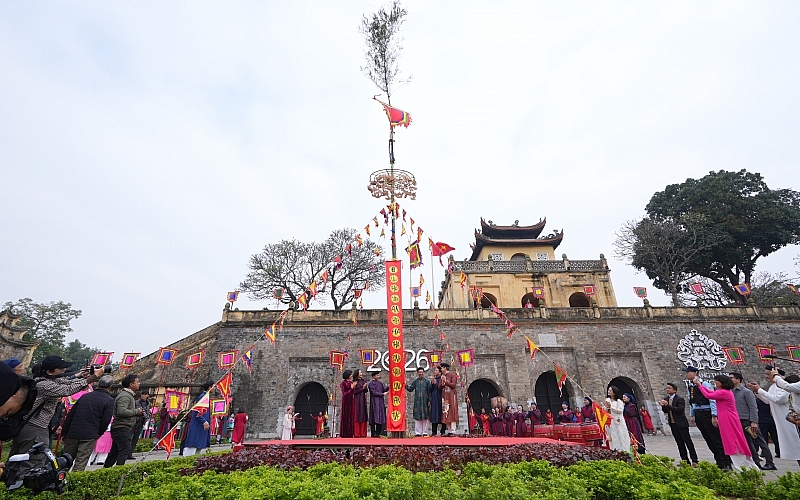
The Ceremonial Raising of the New Year Bamboo Pole (Lễ Thướng Tiêu)
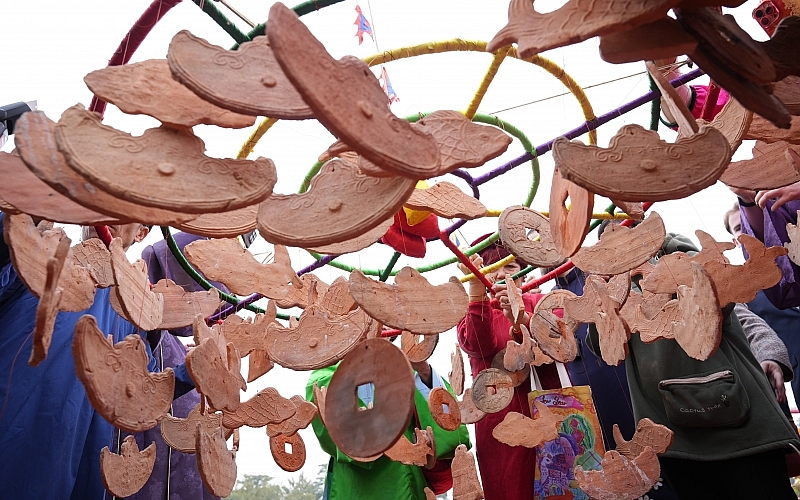
The New Year bamboo pole (cây nêu) is a long-standing traditional custom of the Vietnamese people during Lunar New Year celebrations. The pole is typically a tall, straight bamboo tree stripped of most branches and leaves, leaving only a small cluster at the top. Various spiritual objects such as talismans, five-colored flags, and wind chimes are often attached to the top, depending on local customs.
The raising of the bamboo pole symbolizes the warding off of evil spirits, the protection of the household from misfortune, and prayers for peace and good fortune in the new year. Traditionally, the pole is erected on the 23rd day of the twelfth lunar month, following the Kitchen Gods ceremony, and taken down on the 7th day of the first lunar month, marking the end of the Tet holiday season.
For many years, the Thang Long – Hanoi Heritage Conservation Centre has recreated both the raising and lowering of the New Year bamboo pole on the 23rd day of the twelfth lunar month in order to preserve one of Vietnam’s cherished traditional cultural customs.
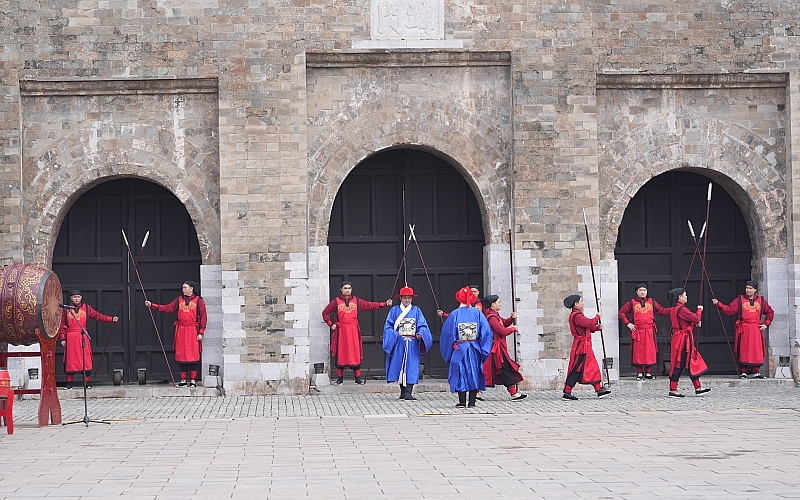
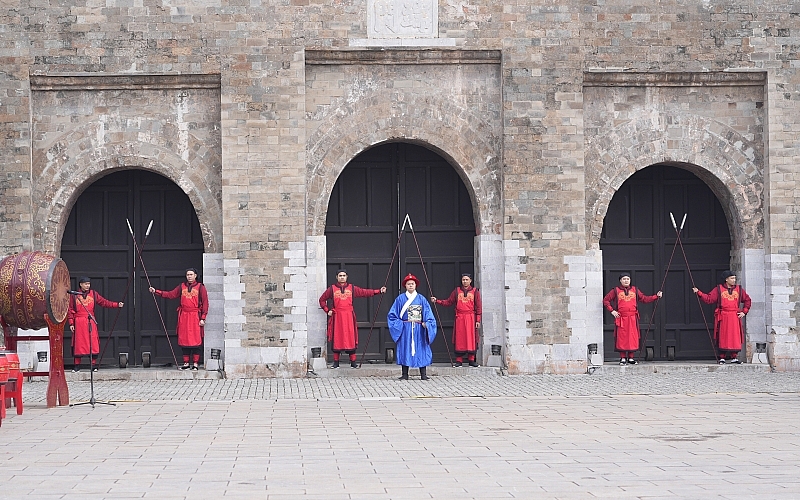
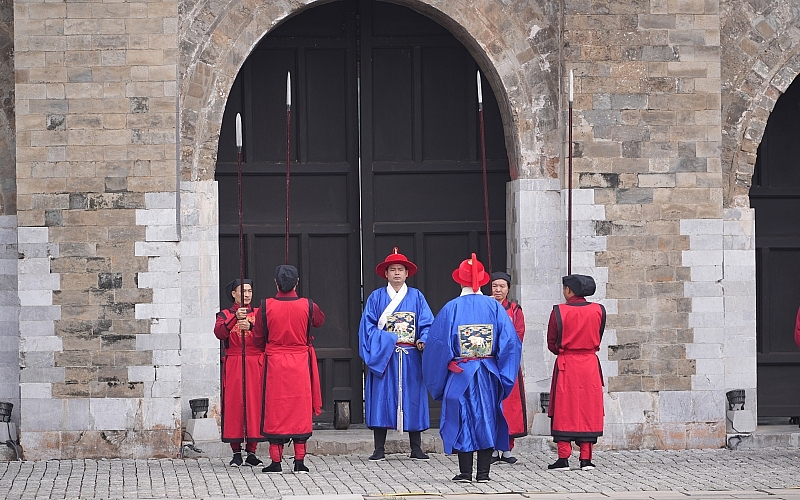
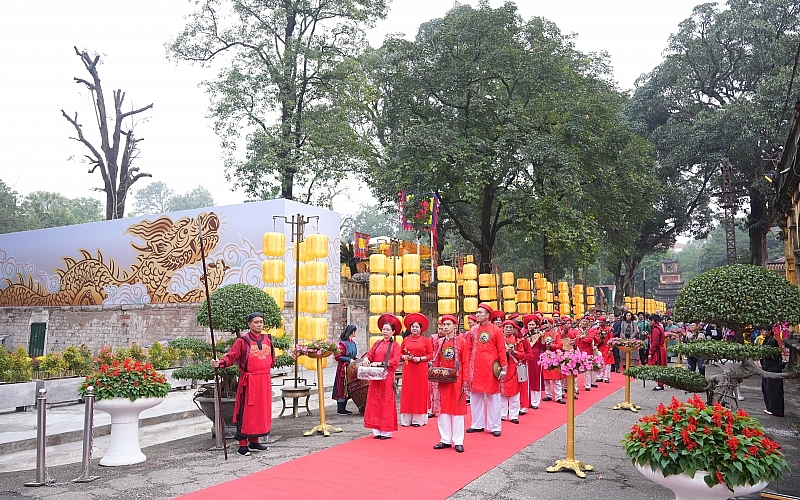
The Guard Changing Ceremony
The guarding and protection of the royal citadel were carried out under extremely strict regulations throughout the feudal dynasties. The changing of the guard was an important daily ritual within the Forbidden City of Thang Long, particularly during the Lê Dynasty.
Entry into and exit from the royal palace required a royal decree. During the day, ivory tokens and command flags were used, while at night tiger tallies and command flags served as authorization before the palace guards would open the gates. To ensure proper security, military regulations required soldiers to arrive punctually, maintain full troop numbers, and carry all necessary equipment.
The Thang Long – Hanoi Heritage Conservation Centre presents a creatively adapted reenactment of the royal guard changing ceremony, with the hope that introducing and reviving ancient court rituals will contribute to preserving the enduring vitality of Vietnam’s traditional cultural and historical heritage, while offering today’s audiences unique experiences within the sacred atmosphere of the thousand-year-old Thang Long Imperial Citadel.